
How to Check Criminal History in Glasgow
Begin close to the Glasgow event. Glasgow criminal records do not sit in one searchable city database. A Glasgow police event starts with the city custodian, a booking moves to the Howard County Sheriff, and a filed municipal or state case is searched through the Missouri courts. The location matters because Glasgow extends into Chariton County. Record the street address, agency name, arrest date, and any case or report number before choosing a route.
- Identify whether Glasgow Police created the report and whether the event occurred on the Howard County side of the city.
- Ask the Glasgow custodian for the daily-log entry or a named incident record, including each media type wanted.
- Search Missouri Case.net for a public municipal or state case, then read the disposition count by count.
- Call the Howard County Sheriff at 660-248-2477 for current custody, booking, or real-time warrant verification tied to Howard County.
- Use MACHS when a Missouri repository search or a fingerprint-based self-review is the actual need.
Each Glasgow result answers a narrow question. A Glasgow daily-log entry records basic event facts. A booking shows custody. Case.net shows what was filed and what the court did. MACHS reports information available from the Missouri Central Repository under state dissemination rules. A missing hit in one source does not clear the other sources.
Glasgow Records Across Two Counties
Glasgow lies along the Missouri River and extends into both Howard and Chariton Counties. That boundary creates a local search problem. A person who searches only Howard County because the city name is Glasgow may miss a filing tied to the other side. Use the event address, arresting agency, court heading, and case number to confirm the county. Do not infer the custodian from the mailing city alone.
For a Glasgow event on the Howard side, Glasgow Police may hold the city report, the Howard sheriff may hold the booking, and the Howard Circuit Clerk may hold the court file. A Chariton County filing will use its own county path. Statewide Case.net and MACHS can help widen a Glasgow search, but neither replaces a precise request to the office that created the local record.
Note: “Glasgow” identifies the city, but the incident address and case caption identify the county record system that must be checked.
The Glasgow Police Department
Glasgow Police holds reports created by its officers, including basic Glasgow incident, complaint, accident, and arrest material. The research found no verified Glasgow records portal, downloadable request form, public arrest blotter, warrant search, records email, app, or stable copy-fee schedule. The workable route is a direct request to the Glasgow custodian under Chapter 610. Current direct department contact details and counter hours should be verified with the city before a trip.
A useful Glasgow request names the report or incident number when known. Otherwise, give the date, time range, exact Glasgow location, involved names needed to locate the event, and the exact record sought. List the Glasgow narrative report, dispatch or CAD entry, audio, video, photographs, and probable-cause material separately. Ask for electronic delivery and a cost estimate. That level of detail helps staff locate existing records without turning the request into an open-ended research question.
Glasgow Police Daily Log Records
The official Glasgow municipal code requires a police daily log with public basic facts about crimes, accidents, complaints, and arrests. This is Glasgow’s strongest city-specific access feature. It does not promise an online database. No searchable interface, archive, date filter, name field, or export control was verified. Ask the custodian for the entry covering a defined date, time, place, or event type.
The Glasgow daily log is also not a conviction list. A basic Glasgow arrest fact records an enforcement event. The prosecutor may file a different count, file no charge, or proceed in another court. Read the later Case.net docket and judgment before describing the result. If the requester needs the officer’s full account, the log may only be a starting point; request the incident report and any distinct public media by name.
The manifest’s official Glasgow municipal-code capture shows the city law source used for the municipal division and records rules.
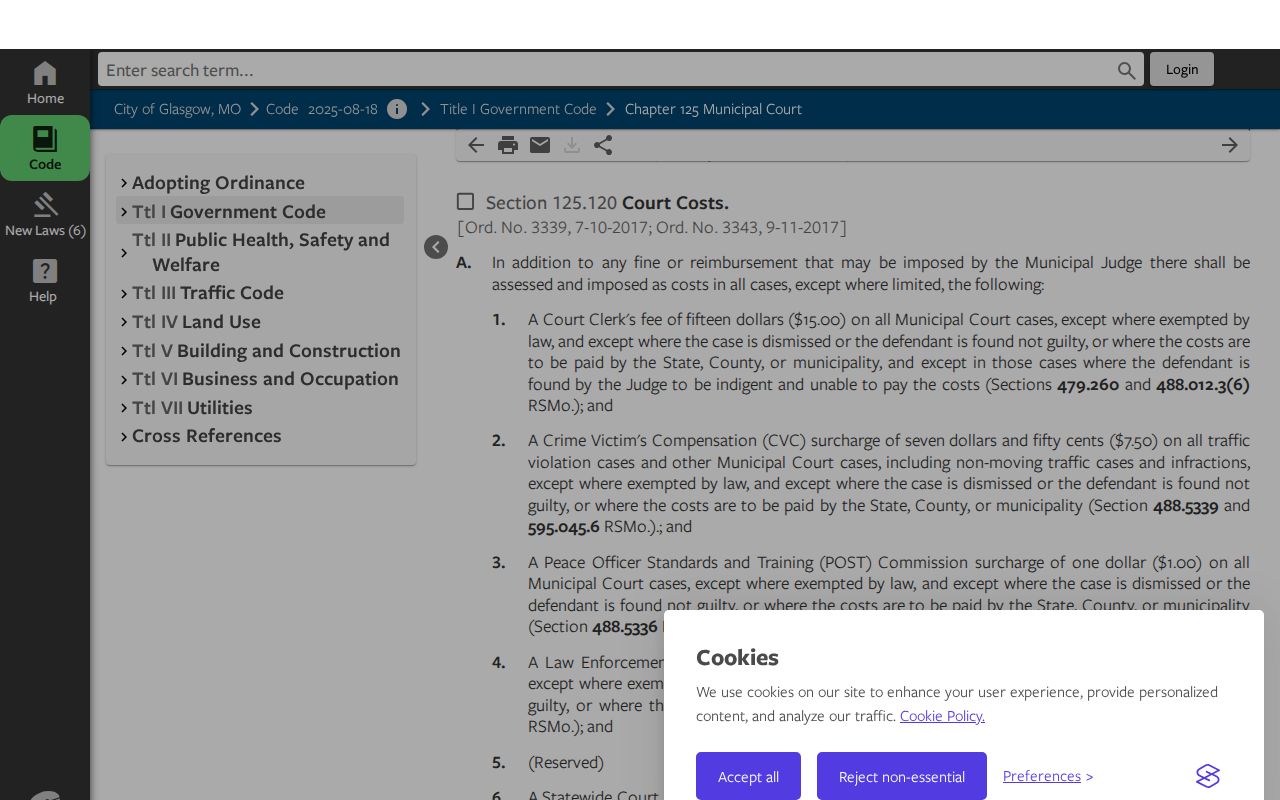
The captured code source helps distinguish a rule printed in Glasgow law from a feature that the city actually offers online.
Arrests and Bookings in Glasgow
A Glasgow arrest can create several dates and files tied to Glasgow. The city officer creates the incident or arrest report. If the person enters county custody, the Howard County Sheriff creates the booking record for that Glasgow arrest at 100 N. Mulberry Street in Fayette. The prosecutor may file a case later, and the clerk then creates the judicial docket. Those records need not use the same initial charge description.
No separate Glasgow city jail roster or Glasgow booking database was documented. For present Howard County custody, call the sheriff at 660-248-2477. For older Glasgow booking details, direct a Sunshine request to the sheriff. For the police narrative, return to Glasgow. For charges and disposition, use Case.net or the court clerk. The broader Howard County arrest history route explains the county booking layer without changing who owns the city report.
A same-day search can be incomplete. Intake may occur before a prosecutor files a public case. Release from jail does not prove that the case was dismissed, and a listed bond is not a fine or final judgment.
Glasgow Booking Records Leave the City
The lack of a Glasgow jail search can trip up a reader who expects each police department to publish its own custody list. Glasgow Police and the Howard County jail are different custodians. The Glasgow police report explains the alleged encounter. The sheriff’s Glasgow booking record states when custody began, the delivering agency, listed holds or charges, bond information, and release authority where public.
If later state incarceration or supervision appears, use the MODOC Offender Search. That tool covers people in the Missouri Department of Corrections system, not every Glasgow arrest or short county-jail stay. A local booking can therefore be absent from MODOC even though Glasgow Police and the sheriff have records.
Glasgow Municipal Court Records
Glasgow’s municipal division is styled as part of the Circuit Court of Howard County at Fayette, and its judge sits at the Howard courthouse. The Glasgow division hears Glasgow ordinance and authorized traffic matters. It does not try Missouri felony cases. Search Case.net first, then ask the Glasgow municipal clerk or Howard clerk where an older or remotely unavailable file is maintained.
| Court Name | Glasgow Municipal Division, in the Circuit Court of Howard County at Fayette |
|---|---|
| Case Types Heard | Glasgow ordinance violations and authorized municipal traffic matters |
| Case Lookup Channel | Case.net, followed by municipal-clerk or circuit-clerk contact for unavailable records |
| What the Docket Shows | Case number, charge, events, settings, warrant entries, disposition, and financial entries when public |
| Copies & Fees | Ask the clerk for the current copy or certification price; court assessments are not copy fees |
Check the Glasgow charge authority. A Glasgow ordinance case is not automatically a Missouri criminal conviction. When Missouri law is charged by the county prosecutor, the Glasgow matter follows the state criminal path. A current warrant needs direct court or sheriff verification even if an older docket entry appears online.
Glasgow Court Costs Versus Record Fees
Glasgow’s code lists municipal assessments that may apply in a case: a $15 clerk fee, $7.50 crime-victim assessment, $1 POST assessment, $2 training assessment, $7 automation assessment, and $2 inmate-security assessment, plus possible actual warrant, service, or confinement costs. Those amounts are court costs where legally applicable. They are not a price list for a public report and not a fee to search Case.net.
The code also says a defendant facing possible confinement of at least 15 days may not be charged for the police report, probable-cause statement, or relevant stop or arrest video furnished on a written discovery request. That is a discovery rule for the accused in a qualifying case. It does not promise every member of the public a free Glasgow police file. A public requester should still ask the city custodian for a written estimate under the Missouri Sunshine Law.
Where Glasgow Records End Up
Glasgow records move according to their function, not into a single merged file. Glasgow Police keeps the local narrative. The county jail keeps Glasgow booking data. The court preserves filed charges, motions, pleas, judgments, and sentences. Reportable fingerprints and dispositions then feed Missouri’s central repository. Delays, amendments, and different legal access rules can make the sources look inconsistent for a time.
Record flow: Glasgow Police Department › Howard County Courts › Missouri State Highway Patrol, Criminal Justice Information Services Division, Missouri Central Repository
Use the newest city or jail source for a recent event, but do not treat it as the final result. For a completed matter, compare the court disposition with the repository response. A name-based MACHS hit is not a fingerprint identity match. When reviewing one’s own disputed state record, use the MSHP correction process and obtain the originating Glasgow report plus the certified court disposition. The manifest’s Missouri prosecuting-attorney directory capture identifies the official directory that routes Howard County prosecution questions.
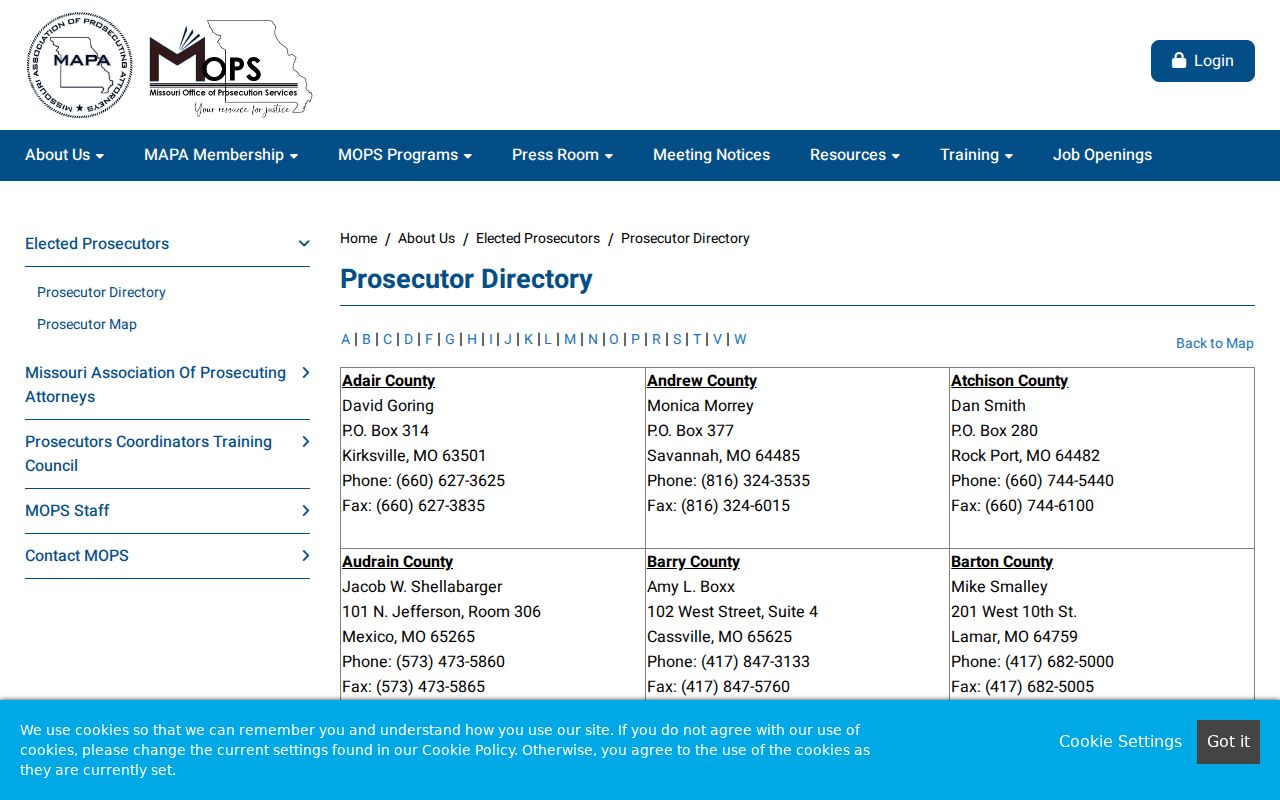
The directory source reinforces that a city arrest report and a state charge are handled by separate public offices.
Historic Glasgow Police Court Records
Modern Glasgow Case.net searches have a digital horizon. The Missouri State Archives Howard County inventory documents older Glasgow civil, criminal, and police-court dockets on microfilm. That is the right complement for defined historical or genealogical research when the current electronic index does not reach the needed era.
Ask for a record series and year range, not a present-day status check. An old Glasgow police-court docket can show how a municipal matter was recorded at that time. It cannot prove that a current warrant, custody status, or supervision condition exists today. Current status belongs with the issuing court, the sheriff, or MODOC.
Note: Preserve the source title and search date so an archival Glasgow record is not confused with a current electronic court result.
Public Access Rules
Glasgow police records are governed by Missouri’s access rules, but public does not mean unredacted. Basic Glasgow incident facts may be open while active investigative material, juvenile information, victim details, medical data, and security-sensitive content can be closed or masked. Ask the Glasgow custodian to cite the legal basis for a denial or redaction and request any segregable public portion.
Key Statutes:
Missouri Sunshine Law, Chapter 610 RSMo - establishes public-record access, custodian duties, response timing, fees, and lawful closures.
Section 43.500 RSMo - defines terms used for Missouri criminal-history information.
Section 43.507 RSMo - controls dissemination of open and closed criminal-history information.
Section 610.023 requires an initial response as soon as possible and no later than the end of the third business day. That is not a guarantee that a large video request will be produced in three days. Section 610.026 permits lawful copy and staff charges. Ask for an estimate, a preferred electronic format, and rolling production when a request is broad.
Reading Glasgow Police Record Counts
Glasgow had 1,087 residents in the 2020 Census. At that scale, a small shift in the number of reported events can create a large swing in a rate. Use the Glasgow Police Department agency entry in the Missouri UCR program or the official FBI Crime Data Explorer, name the year, and confirm that all months were reported.
Keep Glasgow offenses, arrests, and clearances separate. Publish raw counts with any rate, and do not merge Glasgow Police totals with Howard County Sheriff activity. The agencies cover different populations and land areas. Glasgow crime statistics provide local context, but they do not identify a person, replace an incident report, or establish the result of a case.